
The fresh restrictions imposed in Maharashtra to contain the second wave of COVID-19 are likely to impact the festive season auto sales, as Navaratri and Gudi Padwa are falling in April, according to rating agency Icra. These two festivals account for a sizeable chunk of the annual vehicle sales across the country, especially in Maharashtra, it said. Gudi Padwa, which is a major festival of Maharashtra, will be celebrated on April 13, while Navrarati will also begin on the same day.

India's leading two-wheeler manufacturers experienced significant growth in May, propelled by strong domestic demand for premium motorcycles and scooters, channel inventory replenishment, and a recovery in export markets.

'Inquiries and bookings are at quite a healthy level.'

The five-year (2015-16 to 2020-21, or FY21) compound annual growth rate (CAGR) of the overall auto industry is now negative at 2 per cent, against 5.7-per cent growth it saw in the previous five years (from 2010-11 to 2015-16).

A cyberattack on an automaker can spread through its wider supply chain and create significant financial losses.

Shortage of semiconductors, price hikes pull January auto sales into red. Dec had seen sales grow for 1st time this FY, which dealers called a one-off.

Skoda Auto is strategically navigating the competitive Indian automotive market by prioritising profitable growth, exploring new powertrain options like CNG and a limited diesel return, and gearing up for a locally produced electric SUV, all while expanding its retail footprint.

Delhi Police have dismantled an organised interstate auto-lifting syndicate involved in stealing high-end vehicles, tampering with chassis numbers, and fraudulently re-registering them using forged documents. Ten key members of the racket have been arrested, and 31 stolen luxury vehicles have been recovered.

Tata Motors has launched the Curvv Series X, an updated version of its coupe-SUV, focusing on enhancing value-for-money by adding more features to lower and mid-spec variants and streamlining the lineup, with prices ranging from Rs 9.99 lakh to Rs 18.99 lakh (ex-showroom).

Auto sales in April have started showing the impact of lockdowns that has put the brakes on the recovery of the sector, a report said on Tuesday. With more states announcing lockdowns and some more OEMs expecting to go for maintenance shutdowns, as many as 50 per cent of the dealers are likely to be impacted by the move, it added. However, the full-year prospects remain positive if the COVID wave recedes in the April quarter and the vaccination drive goes as planned, brokerage firm Centrum said in the report.

India-EU FTA opens a bigger European market for Indian carmakers while giving European brands greater access to India.

Electric passenger vehicle retail sales in India surged by 81.2 per cent to 26,682 units in May, with Tata Motors leading the segment, while electric two-wheeler sales also saw a substantial 62.76 per cent increase, according to the Federation of Automobile Dealers Associations (FADA).

Indian carmakers, including Maruti Suzuki and Kia India, reported robust sales growth in May 2026, with both companies achieving their highest-ever monthly sales despite rising fuel prices. Maruti Suzuki's domestic sales surged to 1,93,535 units, while Kia India recorded 27,586 units, driven by strong demand in mini and compact segments and a shift towards electric and CNG vehicles.

While commercial vehicle (CV) sales were the worst hit, down by 21 per cent to 67,793 units from 85,833 units, two-wheeler sales dropped by 16 per cent to 12,64,169 units from 15,00,545 units. Passenger car sales dropped nine per cent to 215,716 units from 236,586 units.

Mundhe said the FDA was examining advertisements for products other than tobacco-related items and would act wherever misleading claims or other violations were found.

Mahindra & Mahindra (M&M) Ltd reported a significant 34 per cent year-on-year increase in Profit After Tax (PAT) to Rs 5,455 crore for the June quarter, driven by strong performance in its Auto and Farm segments despite challenging macro-economic conditions.

Indian passenger vehicle manufacturers are significantly increasing production and stocking dealerships in anticipation of strong festival season demand, with new launches planned and supply bottlenecks being addressed. However, the industry faces potential moderation in growth during the second half of FY27 due to a high base from last year's post-GST surge, commodity inflation, and elevated inventory levels.
Supply chain constraints will keep plaguing automobile companies even though demand significantly improved resulting in a 13 per cent year-on-year (YoY) increase in sales in financial year 2021-22 (FY22). Executives at auto firms fear that the Russia-Ukraine war will further dent the sector's prospects of recovery as supply chains face more disruptions. "The visibility in the supply side is so hazy that it is difficult to give even one quarter projection. But all the parameters of demand like pending bookings and enquiries are increasing.
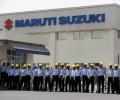
Delhi Police have dismantled a fake auto parts racket operating in Karol Bagh, arresting two individuals and seizing counterfeit spare parts valued at Rs 25-30 lakh.

Bajaj Auto, the sole player in India's CNG-powered motorcycle segment, has seen a dramatic drop in registrations for its Freedom 125 CNG bike, from a peak of 12,167 in November 2024 to just 1,211 in May this year, primarily due to reduced price arbitrage between petrol and CNG and growing availability challenges.
Delhi Police busted a racket involved in manufacturing and supplying counterfeit automobile parts, arresting two men and seizing a large consignment of fake products.

Bajaj Auto is set to launch new Pulsar motorcycles in the 125cc and 150-250cc segments in Q2 FY27, aiming to capitalise on the upcoming festival season surge. This move follows strong growth in the 150cc-plus segment, where refreshed Pulsar models already account for over 50 per cent of Bajaj's sales.
Thi is the best-ever monthly sales achieved in passenger cars, motorcycles and total two-wheelers segments.
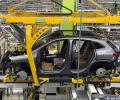
Domestic passenger vehicle dispatches in India rose 25.4 per cent year-on-year to 4,37,312 units in April, continuing the strong demand momentum from the previous fiscal year, according to SIAM.
Automobile sales in January dropped 7.45 per cent, compared to the same month in 2008. Despite the decline, it is the first indication that the fall in sales, which occurred between October-December 2008, could be bottoming out and many hope for a recovery in February or March.

Indian equity benchmarks Sensex and Nifty surged nearly 1 per cent, driven by strong earnings reports from FMCG and auto sectors, alongside a rally in Asian markets and signs of de-escalation in geopolitical tensions.

The Ministry of Heavy Industries (MHI) anticipates disbursing approximately 4,700 crore in incentives under the automotive PLI scheme in FY27, more than double the previous two years, while also exploring financing mechanisms for electric buses and trucks and promoting domestic manufacturing of critical EV components.

India Inc's first-quarter earnings season was significantly impacted by the West Asia conflict, leading to rising costs, calibrated price increases, and margin pressures across various sectors including FMCG, automotive, steel, and cement. Companies are implementing price hikes to protect profitability, with many anticipating further escalations if input costs remain elevated.

Automobile retail sales rose nearly 18 per cent year-on-year to over 27 lakh units in January, led by continued post-GST momentum, healthy rural cash flows on the back of harvest and weddings, and sustained demand visibility across freight, dealer's body FADA said on Tuesday.

Larsen & Toubro (L&T) is investing Rs 5,000 crore over five years to enter the automotive components sector, focusing on electric vehicle (EV) motors, safety systems, and connected-vehicle technologies, aiming to become a Tier-I auto supplier.

The growth momentum that started during the festival season is likely to sustain in the new year, reports Arindam Majumder.

Maruti Suzuki India's CFO, Arnab Roy, has urged the central government to introduce an amnesty scheme or an 'as-is' settlement option to resolve past indirect tax disputes, aiming to clear legacy litigation and foster growth in the automotive industry. Roy emphasised the need for a 'smarter way to address the past' to provide long-term certainty for businesses.

Leading automakers Maruti Suzuki, Hyundai and Tata Motors reported decline in wholesales in August as the companies curtailed vehicle dispatches amid drop in demand and to cut inventories at dealer level. Market leader Maruti Suzuki India said its total domestic passenger vehicle wholesales were at 143,075 units last month as compared to 156,114 units in the year-ago month, registering a dip of 8 per cent. Sales of mini segment cars, comprising Alto and S-Presso, declined to 10,648 units last month as against 12,209 units a year ago.

A government adviser has called for India to reintroduce a petrol variant with a lower ethanol blend, such as E10, alongside the current E20 fuel. This move aims to protect millions of older vehicles, particularly two-wheelers, which may experience performance issues and damage from the higher 20 per cent ethanol blend.

India's auto retail sector achieved record-breaking sales of 2,96,71,064 units in FY26, a 13.3% increase, primarily driven by the implementation of GST 2.0 which reduced the tax burden on mass-segment vehicles, according to the Federation of Automobile Dealers Associations (FADA).
After the easing of lockdown in mid-May, auto companies were able to resume production in a phased manner, but the ramp-up was slow due to a broken supply chain, and lockdown-induced restrictions.

India's electric vehicle (EV) markets expanded gains in January compared to the year-ago period, as two-wheeler and passenger vehicle sales triggered a shuffle in the competitive landscape, data from an automobile dealers' association showed.

Automobile retail sales across the domestic market witnessed a 21 per cent year-on-year increase in the 42-day festive season led by record registrations of passenger vehicles and two-wheelers aided by GST rejig enabled drop in prices across segments, dealer' body FADA said on Friday.

Maruti Suzuki has discontinued its Ignis hatchback due to weak sales and a shift towards SUVs, while simultaneously facing supply chain issues for its popular S-Presso and WagonR models, leading to booking halts at some dealerships.

Passenger vehicle (PV) sales growth in India is expected to moderate to 3-5 per cent year-on-year (Y-o-Y) in financial year 2027 (FY27) due to a high base and preponed replacement demand, according to a report released by India Ratings and Research on Thursday.
